
IT’S A LONG WAY TO THE TOP IF YOU WANT TO GO TO LAYA, BHUTAN
Words by PJH
My partner and I recently returned from a great trip to Bhutan. This was our second independent trip to Bhutan organized by Back Track Adventures. Three years ago, we went on an extended trip focusing on the less traveled central and eastern parts of Bhutan – most visitors just visit Para, Tiger’s Nest Monastery and Punakha. On our last night of that trip, we were watching the local news and saw a story on the Royal Highland Festival – we decided we needed to come back to Bhutan and go to the festival.
The Royal Highland Festival was introduced in 2016 by the current king, His Majesty Jigme Khesar Namgyel Wangchuck, with the aim of honouring Bhutan’s mountain communities. The 2-day festival is held annually in late October at Laya, one of Bhutan’s most remote highland villages, and attracts highlands people from across Bhutan, as well as some adjacent countries. The festival is a cultural celebration showcasing the unique traditions of highland communities, with cultural performances including mask and folk dances, sporting activities, foot and horse races and parades featuring yaks, horses, and native highland dogs adorned in traditional decorations and regalia with the stunning backdrop of the Bhutanese Himalayas.
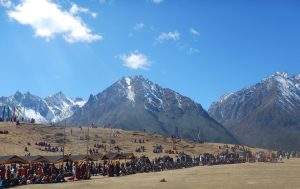
Figure 1: The Royal Highland Festival
In Training
As we are not regular bushwalkers or trekkers, we started training for walking at high altitudes 12 months before we planned to go, but training at sea level is not like walking at 3000m asl! You cannot train too much for this. You should also acclimatise to being at high altitudes. Our suggestion would be to spend time in central and eastern Bhutan prior to the festival – few tourists go to the east, and you could also schedule in attending the Jakar Tsechu/festival.
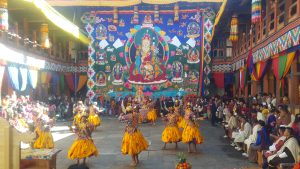
Figure 2: The Jakar Festival
Having already been to eastern Bhutan we chose to spend a week in Darjeeling and Sikkim, the Indian Himalayas, and cross into Bhutan overland.
Our tour company in Bhutan, Blue Poppy, also scheduled in “acclimatisation walks” prior to the ascent to Laya. The climb to the famous Tiger’s Nest Monastery is one such “acclimatisation walk”. The climb starts at 2605m asl with the highest elevation being 3155m asl and takes 7 -8 hours plus visiting time. Tiger’s Nest is stunning and worth the climb! We would recommend bringing trekking poles as they do make a difference, and are especially useful for descents.
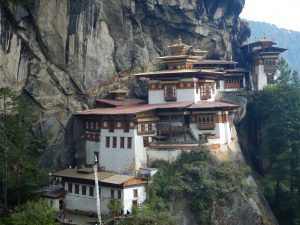
Figure 3: Tiger’s Nest Monastery
Laya – top of the world
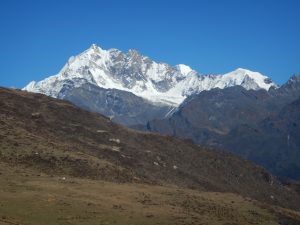
Laya is situated at 3800m above sea level [asl] in northwestern Bhutan and is the 10th highest town in the world. It is inhabited by the indigenous Layap people who have their own language, customs and distinct dress, especially the women who wear conical bamboo hats with a bamboo spike at the top, held on with a beaded band, and black woollen jackets and skirts.
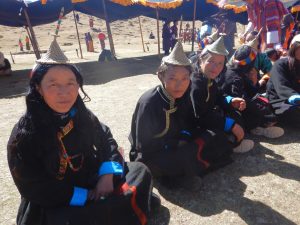
Figure 4: Ladies of Laya
To get to Laya involves a three-hour drive from Punakha, which has Bhutan’s most beautiful Dzong [a fortified monastery], to the town of Gasa, then a three-hour 4WD ride from Gasa to a checkpoint at Taktsi Makha.
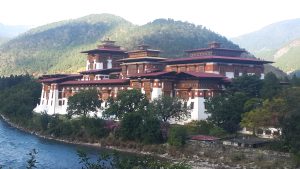
Figure 5: Punakha Dzong
We stayed in a guest house at Gasa with our trekking team of our guide Pema, the trekking manager, cook and helper. We were near hot springs, so got our muscles ready for the impending climb by soaking with locals – there are separate male and female hot baths of increasing temperatures. We left early the next morning for the very bumpy but also very scenic drive to the checkpoint. Then you start walking up to Laya on a well-defined track for around 4 hours depending on pace and fitness. Watch out for stray yaks blocking your way!
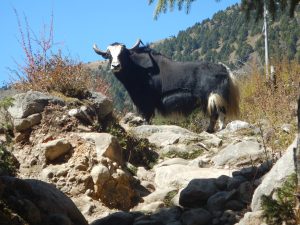
Figure 6: Yakity yakity yak [translation – YOU Move]
Laya is a small village perched on the side of a hill above a glacial river and is surrounded by snow-capped peaks. We camped at Laya, which was fun, but also very cold. There was a thick frost each morning. You need a good sleeping bag, thermals and warm gear to sleep in along with wool socks, gloves and a beanie. A great tip is to try and not use the “toilet tent” during the night as you will not get warm again! You’ll also need warm wind proof outer clothes. Remember to layer clothes in Laya! As the day warms up you can easily shed layers.
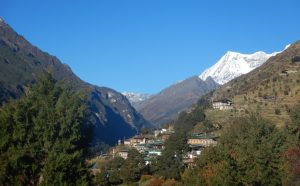
Figure 7: Almost at Laya
Our camp was on the edge of Laya with traditional houses and a monastery nearby and sweeping mountain views – it was amazing! Mornings were cold, but you could sit outside and enjoy the amazing mountain views as the sun came up. Nights were cold and even though we had a dining tent, we went and sat in the cooking tent with its gas cooker and had dinner there with the team – we wouldn’t have got warm otherwise!
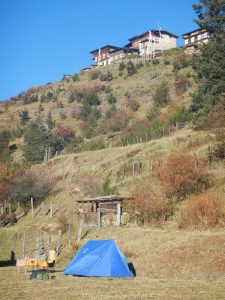
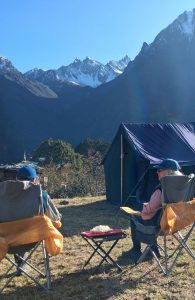
Figure 8: Our tent and our breakfast view
The cook was incredible with his limited resources. Our guide Pema had told the cook in advance that we had been eating local food at local restaurants and not the toned-down food generally provided to tourists. He was able to provide delicious and spicey Bhutanese dishes including Bhutan’s national dish, Ema Datshi [green and red chillies simmered in a cheese/datshi sauce]; Kewa Datshi [sliced potatoes cooked with cheese and chillies]; Shamu Datshi [savoury mushrooms cooked with cheese and chillies]; Shakam Datshi [dried beef cooked with ginger, cheese and chillies]. Yes, there was a pattern to our eating – datshi with everything.
The Royal Highland Festival
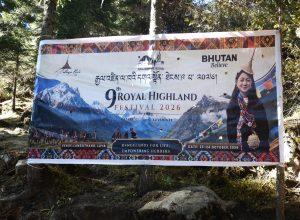
The Royal Highland Festival goes for 2 days with different events on each day. We attended the 2nd day, so unfortunately missed His Majesty the king, who [unusually] attended the first day of the festival this year. On our slow trek up to Laya, we were passed by runners in the 25km Laya Run, a feature event of the 1st day along with a horse race.
The festival grounds are a flat area above Laya at 4000m asl so there is a short but steep climb up. You just join in with the stream of local highlanders heading up the hill.
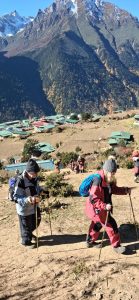
Figure 9: Our climb to festival grounds above Laya
The highlands are prime yak breeding country and so yaks play an important role in the festival. When we arrived, we were greeted by a Yak Cham [dance] of the Brokpa communities of Merak and Sakteng Merak, two remote highland villages in the Trashigang District of eastern Bhutan, nestled inside the Sakteng Wildlife Sanctuary. The dance was inspired by the legend of the God of Livestock, and depicts the domestication of the yak, herding practices and the close relationship between the Brokpa people and their yaks.
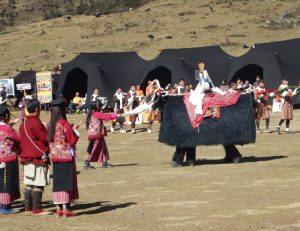
Figure 10: The Yak Cham dance
The Sakteng Wildlife Sanctuary is a protected area for the Migoi [Yeti]. The Bhutanese yeti is special because they have the ability to become invisible, which explains why so few have been seen!
Throughout the day further dances are performed by different highland communities and there is a 2 km Highland race and a Strong Woman Contest that celebrates the strength, determination and endurance of women from the ten highland communities.
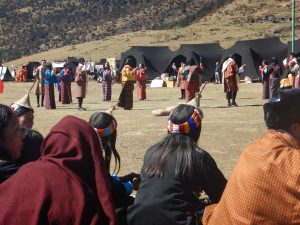
Figure 11: Another traditional dance being keenly watched
Festival guests could also take part in selecting the best Himalayan mastiff dog and yaks – breeding bulls, milch yaks [a female domestic yak kept primarily for milk production], heifers and calves. Whilst we picked the winning Himalayan mastiff, picking the best yaks was like getting a winner in the Melbourne Cup. Throughout the day there was a special lottery granted by His Majesty the King. One local man won a fridge, which he carried off on his back! If you had the energy and could stay warm enough, there was also a night-time music program at the local Laya school as part of the festival.
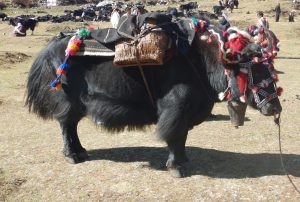
Figure 12: Our best yak choice
A highlight for us was the Royal Tokha – a communal lunch for the festival attendees provided by His Majesty the King. We had Bhutanese red rice, Sikkam Paa [a traditional Bhutanese delicacy made from sun-dried and smoked pork belly, radishes and chillies], Kakur Jaju [a milk-and-pumpkin soup]; and Ema Hokaam Phuelu Datshi [a specialised, rustic variation of Bhutan’s national dish, made with sun-dried green chillies and highland yak curd]. We also tried hard yaks’ cheese, which would have broken our teeth if we had tried to chew it, so after sucking it for 2 hrs we had to give up, defeated! We conquered the climb to Tiger’s Nest and Laya, but couldn’t conquer the hard yaks’ cheese!
The Living Highland Parade
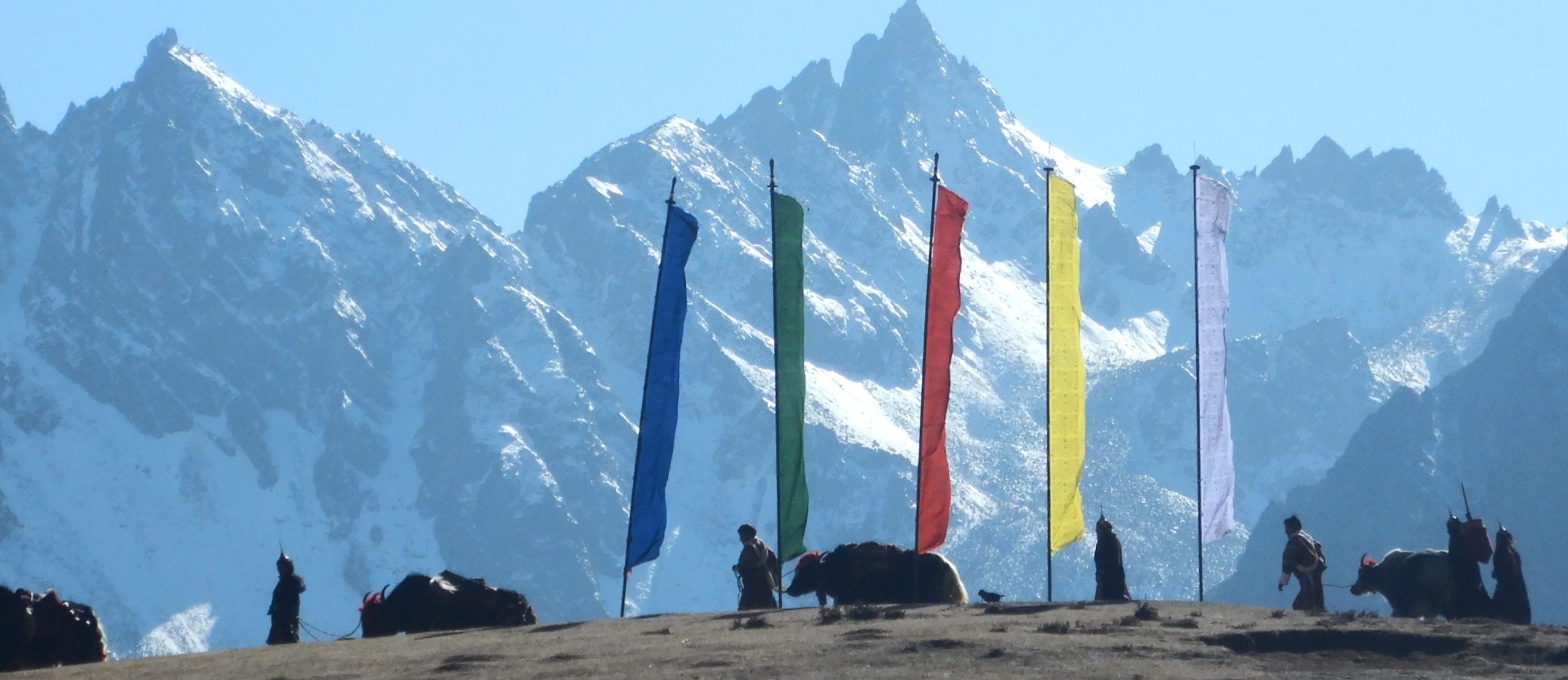
The signature highlight of the festival is the Living Highland Parade that opens and closes the festival. This vibrant parade features all of the highland communities wearing their traditional clothing leading their yaks, horses and native highland dogs, adorned in traditional decorations and regalia. We waited with great anticipation for the “Return” of the Living Highland Parade, which marks a farewell as the herders lead their animals back after participating in the festival. The procession symbolises continuity as the herders and their animals return to their highland herds and rangelands. The procession was fairy-tale like, with the highlanders and their highly adorned animals parading across the festival ground and then turning left and traversing a ridgeline with prayer flags, silhouetted against the might of the snow-capped Himalayas. What a magical end to a memorable day!
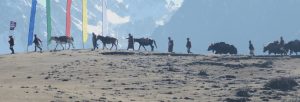
Figure 13: The ” Return” of the Living Highland Parade
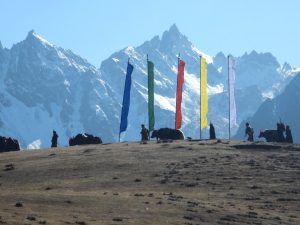
Figure 14: The “Return” of the Living Highland Parade
The next morning we left Laya with a calmness about us as we had been immersed into the wonderous highlands and its unique peoples. Trekking down the track we had slowly climbed 2 days before, we were shaken into reality by the bumps of fully laden mules which were also leaving.
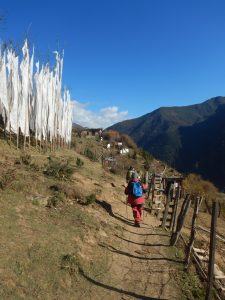
Figure 15: Farewell to Laya and returning to reality