Words by Stephanie Nugent
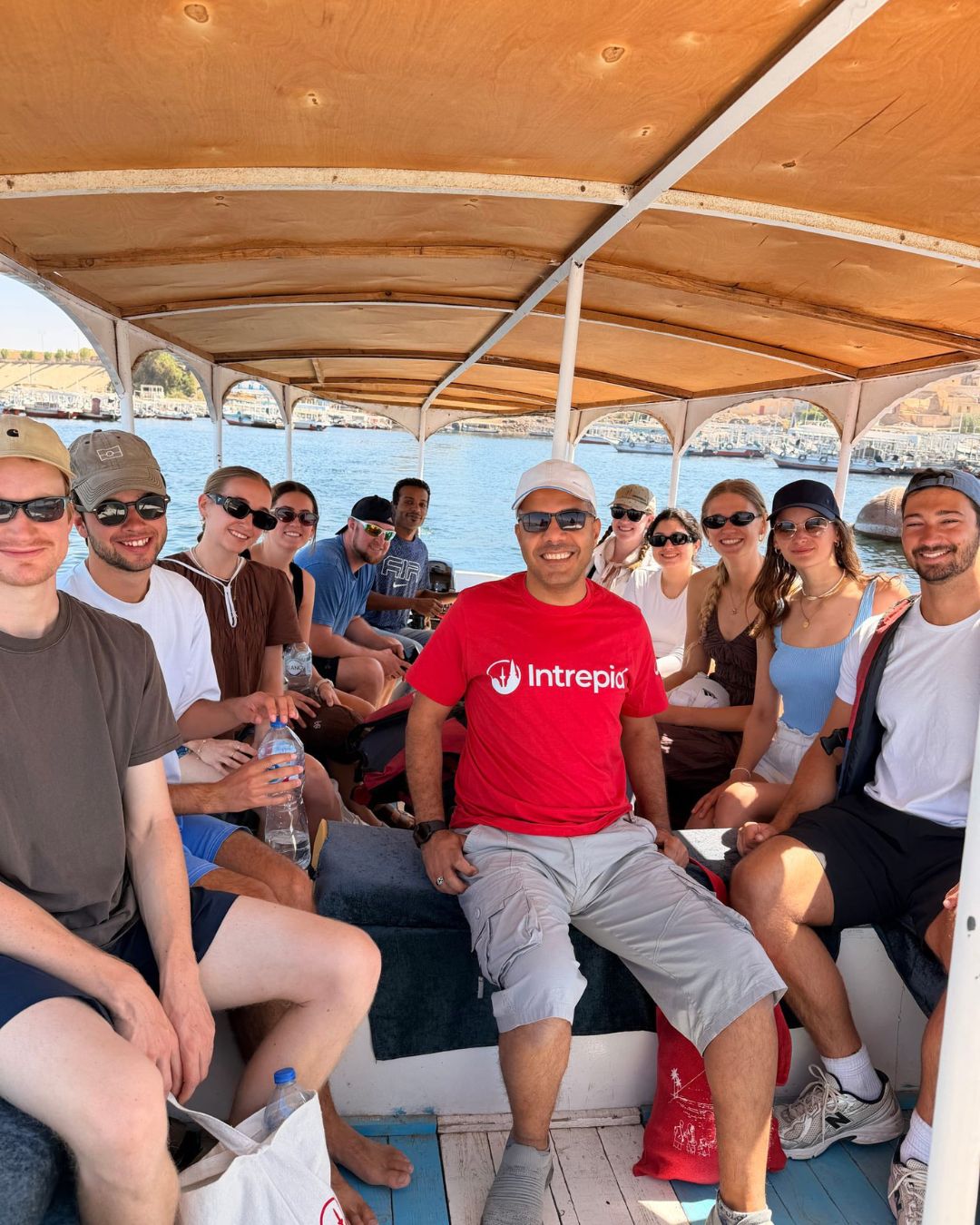
I travelled Egypt with Intrepid on their Essential Egypt 9-day tour and it was a perfect mix of unbelievable wonders and intimate moments, with planned activities and plenty of free time. Egypt is the ultimate bucket list destination, and it did not disappoint.
I’ll admit, I felt a little culture shock arriving into Egypt. That soon faded once I met the Intrepid group and our trip leader, a qualified Egyptologist. I have never left a trip feeling more educated. I’m now convinced I’m fluent in hieroglyphics!
Cairo
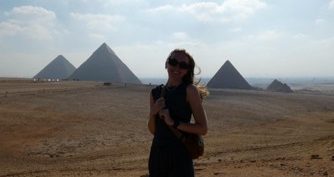
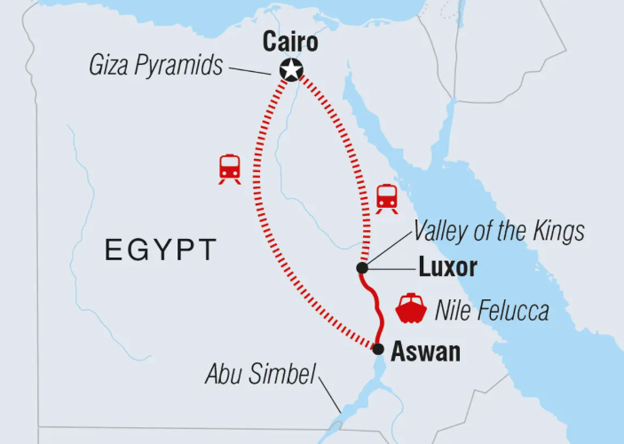
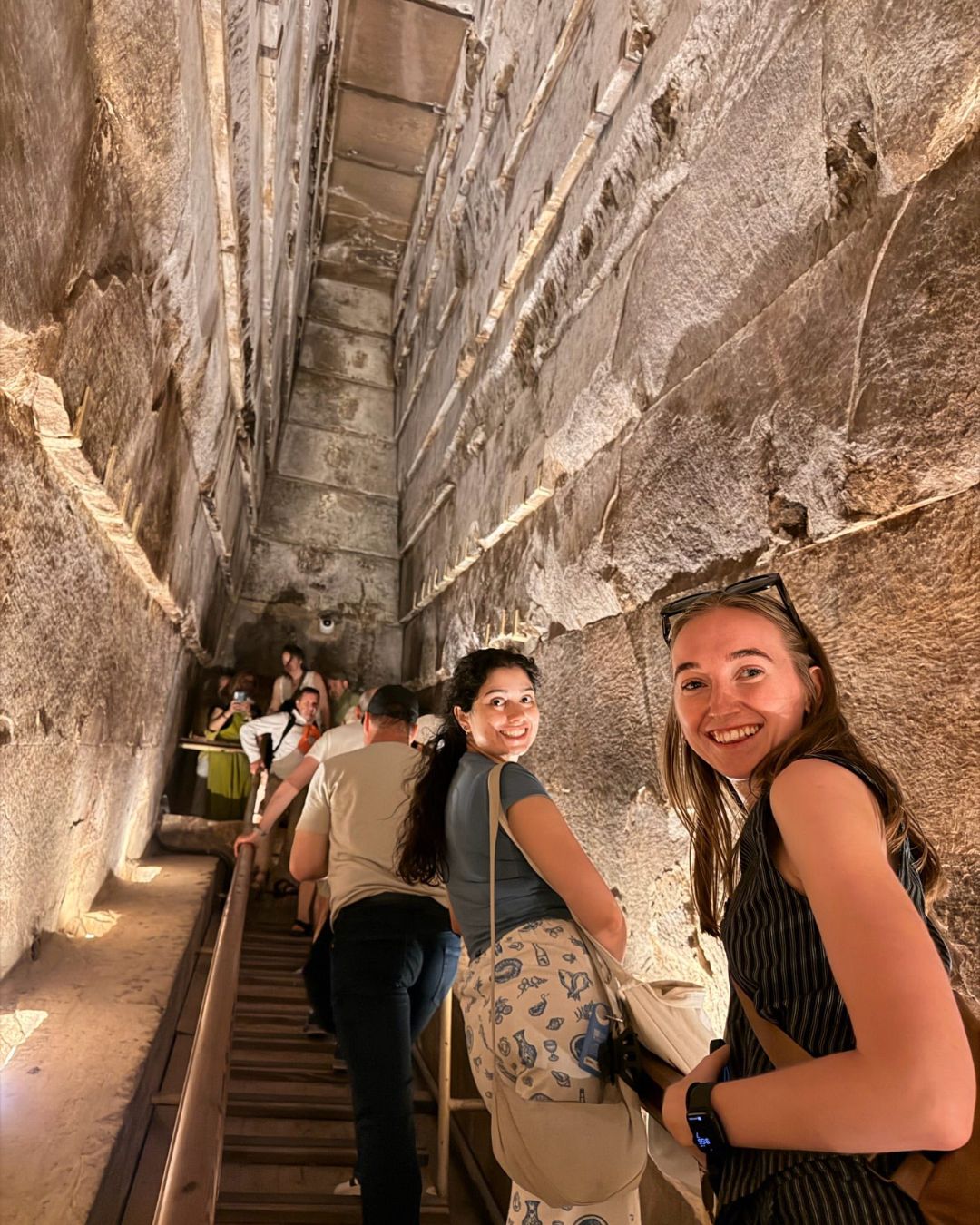
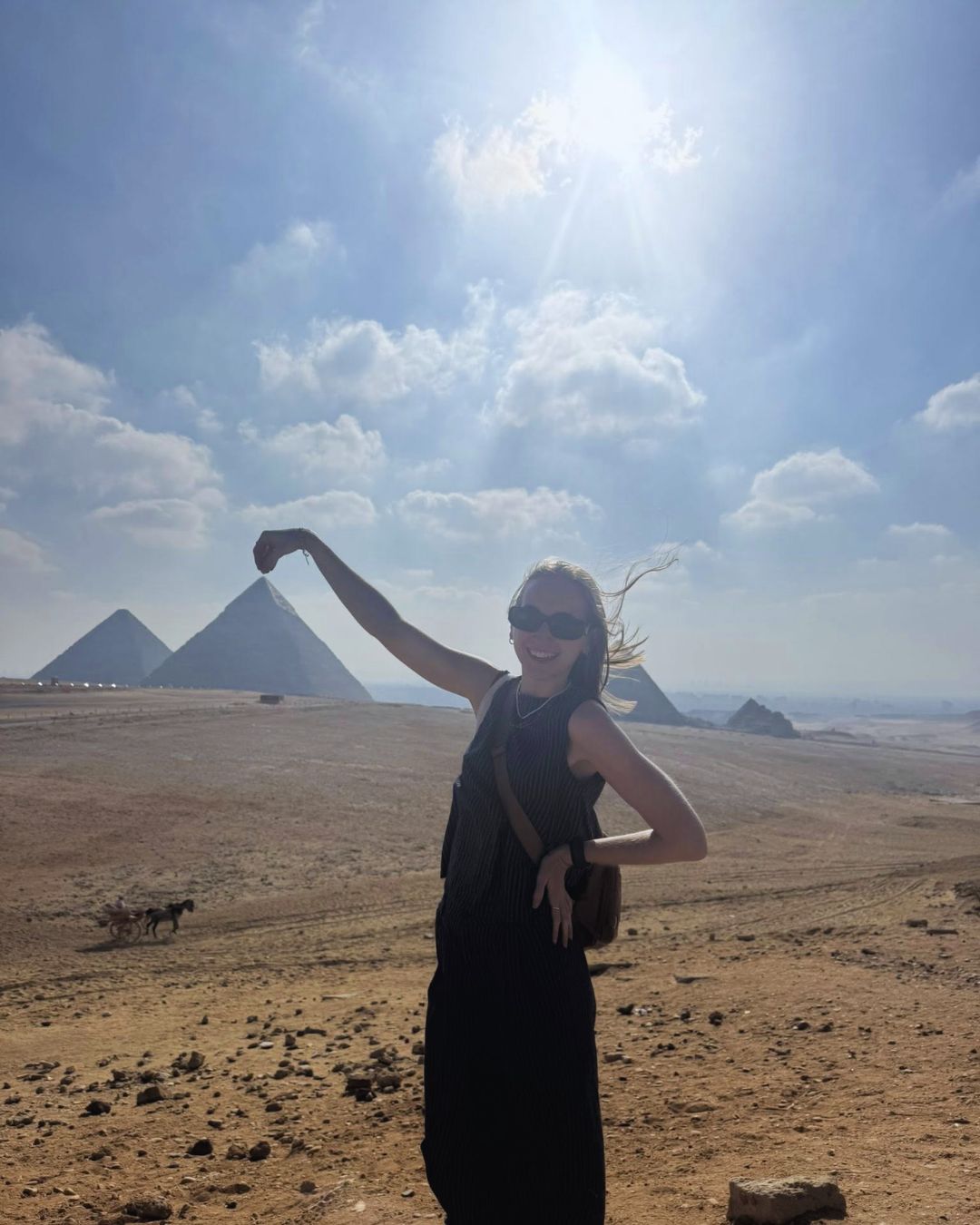
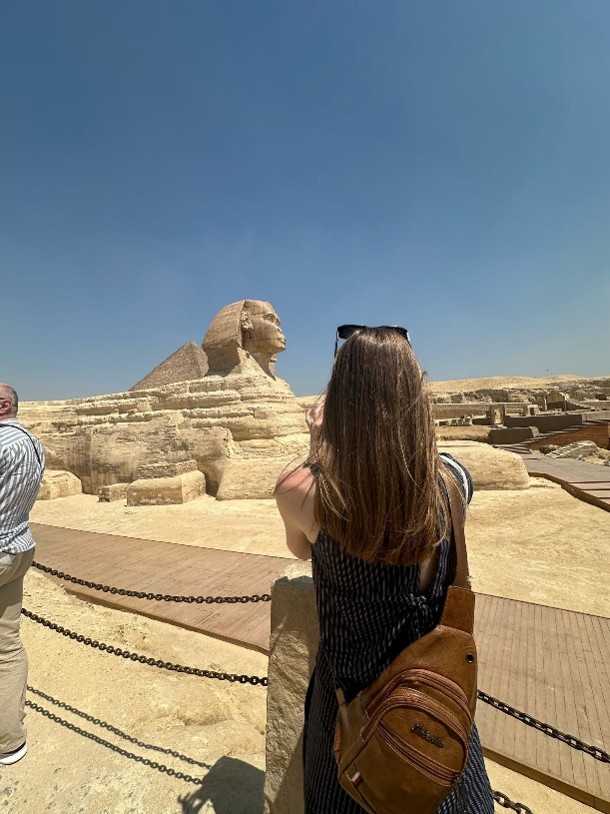
We began in Cairo with the Great Pyramids at Giza. I opted to purchase an additional ticket to enter Khufu’s tomb inside the Great Pyramid. It was a steep, tight and humid climb, and we discovered halfway up that it was a two-way path! Inside the tomb felt otherworldly, truly the resting place of a powerful pharaoh from a powerful time.
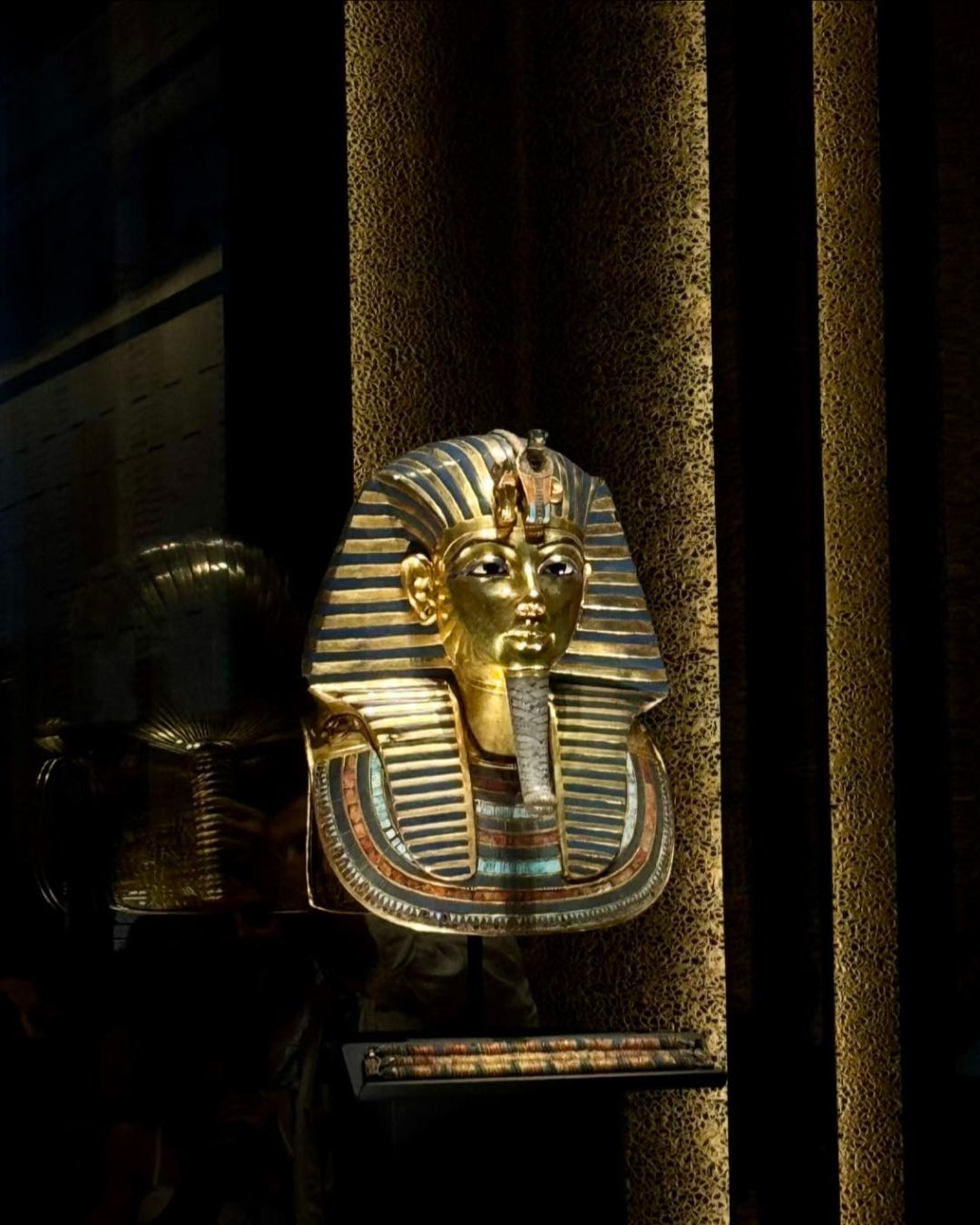
After the pyramids (and of course the Sphinx), a few of us made our way to the Grand Egyptian Museum. I don’t think any museum will ever top the GEM for me. I spent four hours there and still didn’t see it all. With 12 galleries spanning artifacts from the Old Kingdom to the Graeco-Roman period, the highlight was the enormous gallery dedicated to Tutankhamun’s tomb. His mask, sarcophagi, burial shrines, jewellery, chariots, furniture, clothing, preserved food, and incredibly, every single shoe and sock the pharaoh wore in his lifetime. The museum is also fully accessible, with a free motorised cart from the gate, escalators alongside the grand six-storey staircase lined with 60 colossal royal statues, and ramp access throughout the galleries. With restaurants and shopping on site, you could genuinely spend an entire day there.
We then boarded an overnight train to Aswan. Having done a few overnight trains, it neither impressed nor disappointed me. A rough way to sleep, but a great way to skip travel time.
Aswan
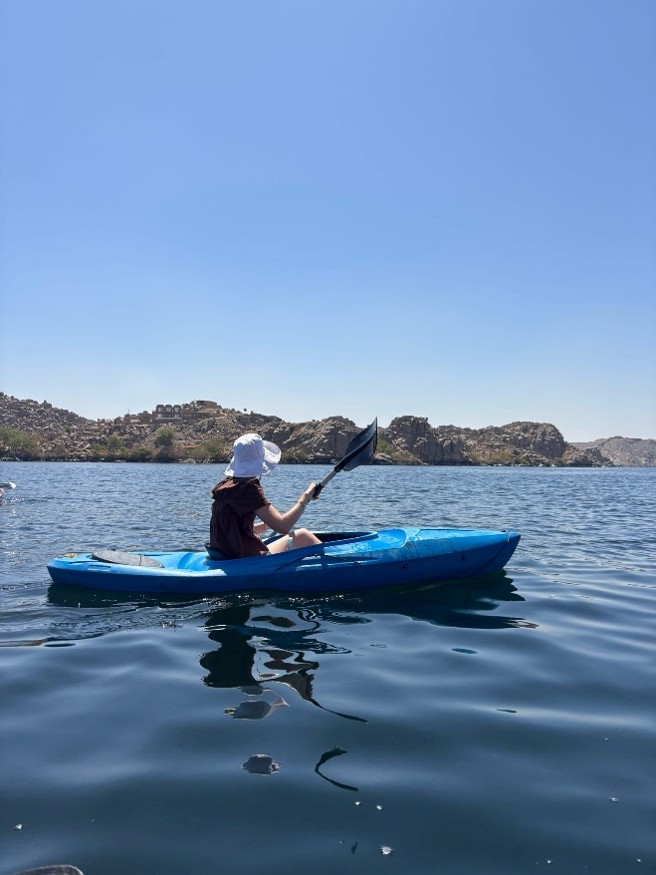
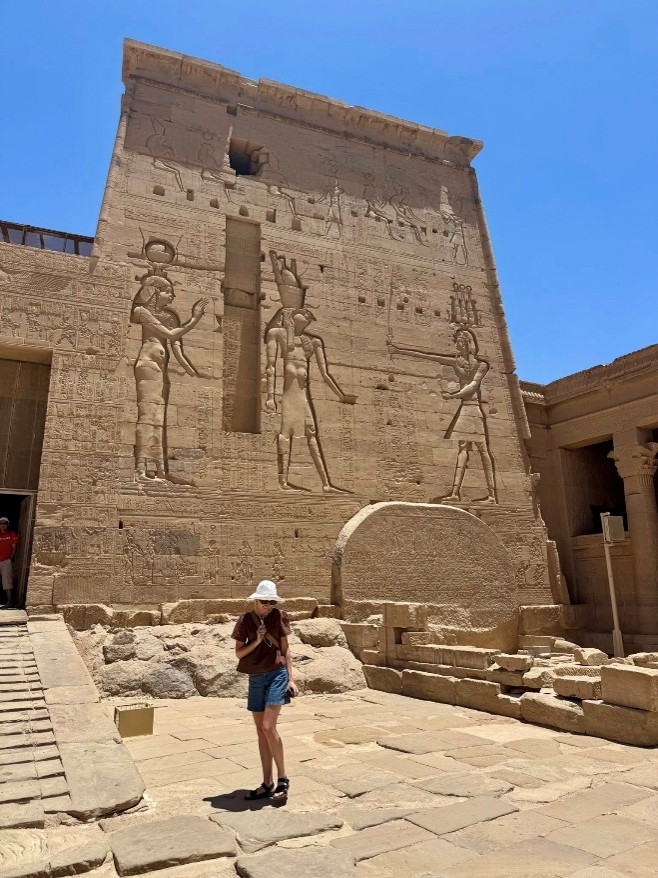
We kicked off Aswan with a morning kayak on the Nile before heading to Philae Temple, dedicated to the goddess Isis. A storybook of history, and even more impressive knowing the entire temple was relocated to prevent it being submerged underwater.
That evening I opted for the extra activity, a Nubian dinner experience. We took a boat tour around Elephantine Island before joining a walking tour with our dinner host. We were welcomed into his home and enjoyed a ridiculously delicious dinner with his family, one of the most memorable evenings of the trip.
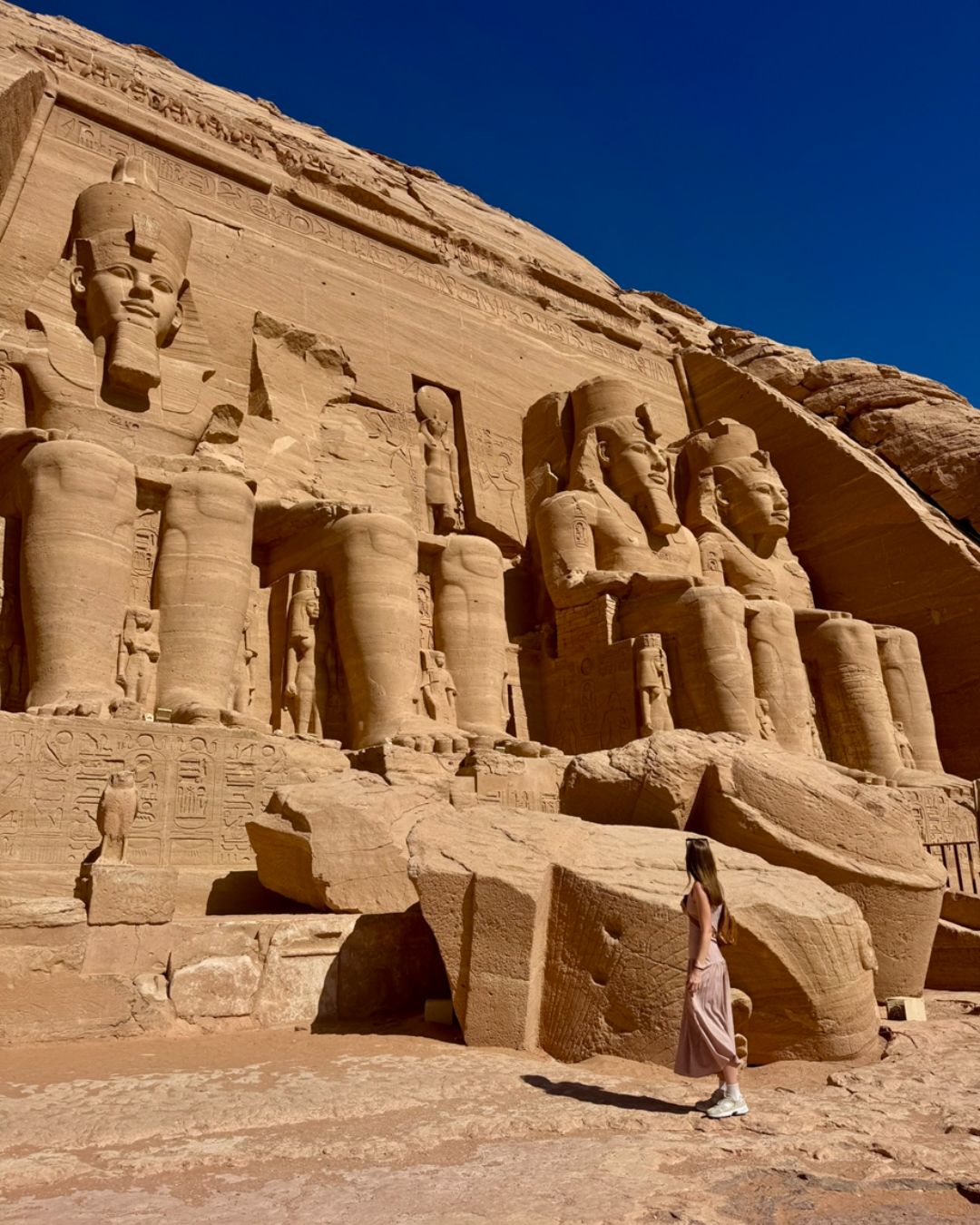
The following day we endured the 4am wake up and made the five-hour drive to the Abu Simbel complex. We were lucky with a relatively quiet crowd and had the space to truly take in these two magnificent temples built by Pharaoh Ramses II, one dedicated to himself and one to his principal wife, Queen Nefertari. Breathtaking doesn’t do it justice. What impressed me equally was learning that in the 1960s, facing submersion from rising waters, the entire mountain was meticulously sawed into massive blocks, dismantled and reassembled on higher ground. I honestly wasn’t sure what impressed me more, the temples themselves or the fact that they moved them.
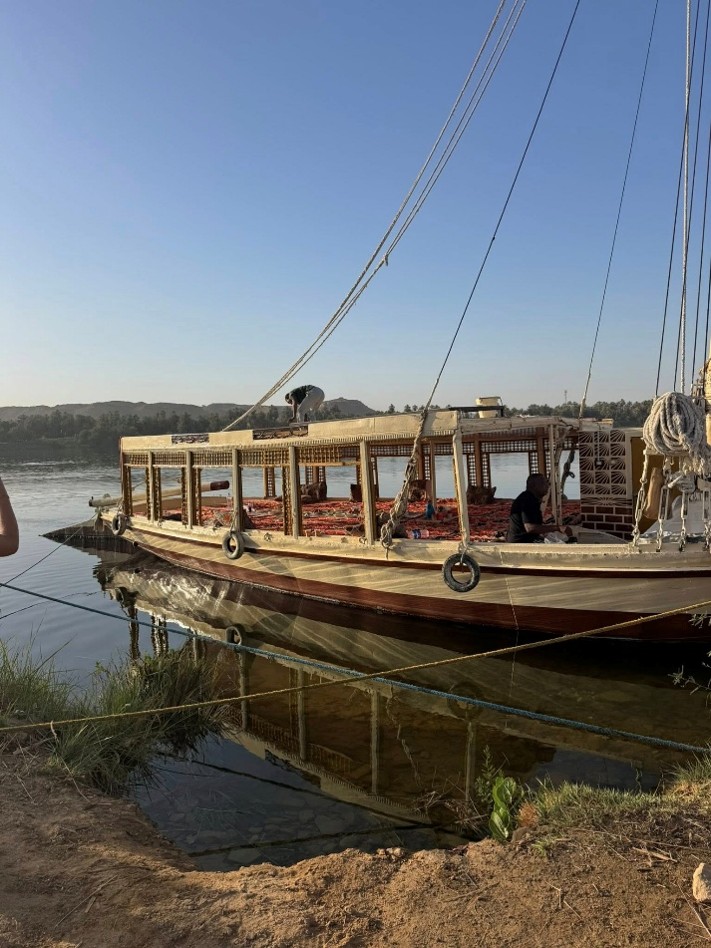
We then embarked on our included overnight felucca trip on the Nile, which quickly became one of the highlights of the entire trip. Great food, beautiful scenery, and not a moment of boredom. We docked the boat, slept under the stars, and woke to a sunrise on the Nile. Truly an experience I won’t forget.
Luxor
Luxor delivered that famous desert heat in full force, with two days of 39- and 41-degree temperatures. Worth every drop of sweat.
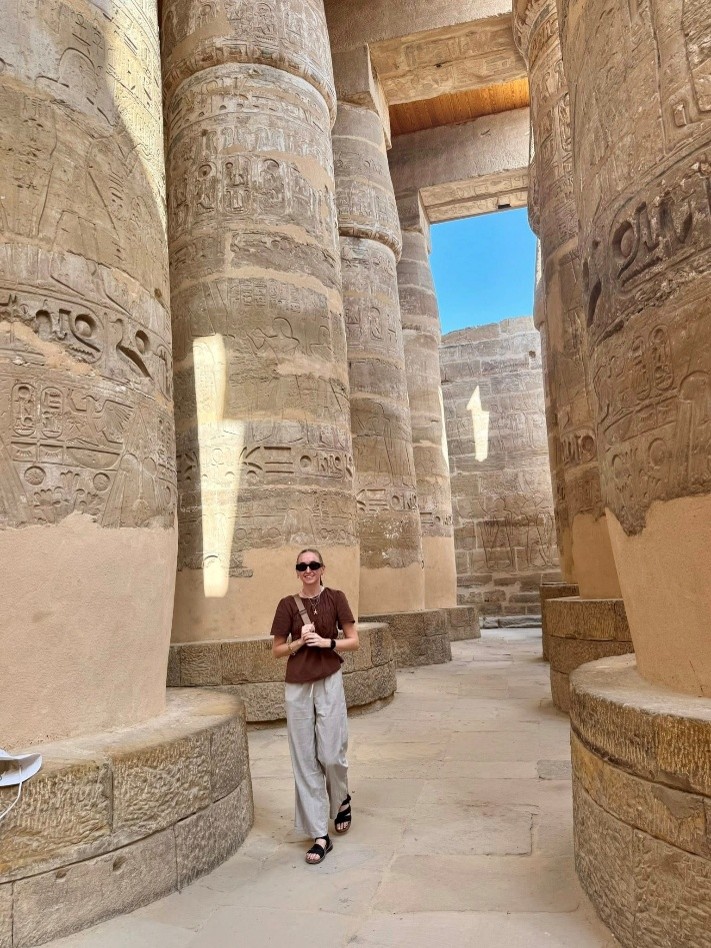
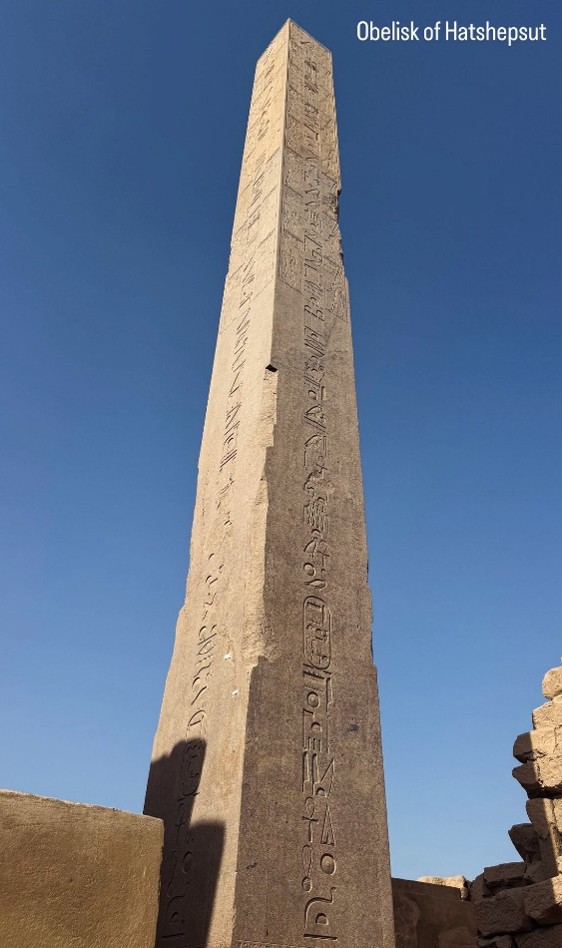
We visited both Karnak and Luxor temples. I visited Karnak first and wish I had done it the other way around. Karnak is simply staggering, a historical document in stone built over 2,000 years with more than 30 pharaohs contributing to its construction. The towering walls and carved pillars functioned as the nation’s historical record, covered in hieroglyphics detailing military victories, offerings, treaties and religious rituals. The Avenue of Sphinxes, lined with ram-headed sphinxes representing the sun god Amun, is a sight to behold.
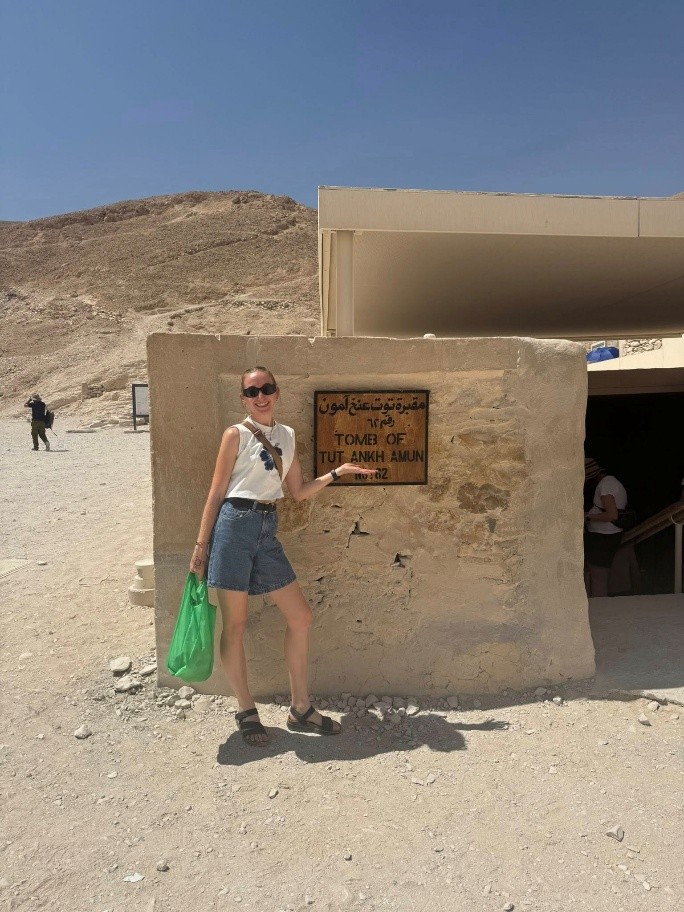
The Valley of the Kings was a treasure. Three tombs were included on the tour, and I purchased an additional ticket to visit Tutankhamun’s tomb.
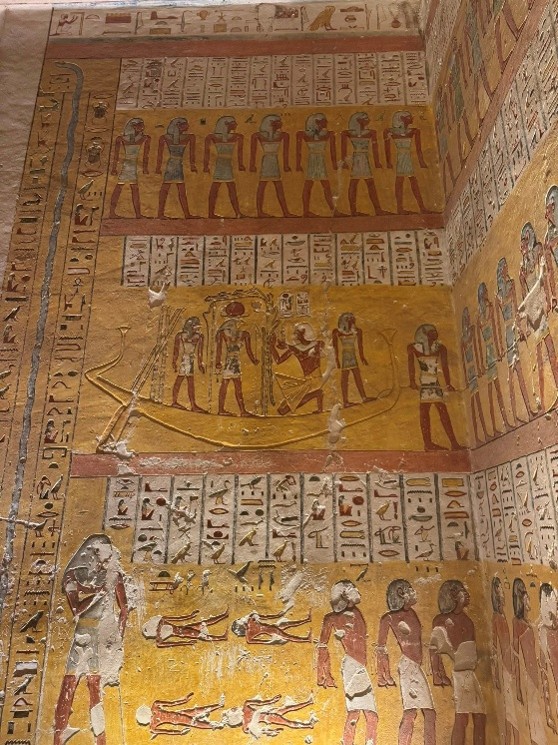
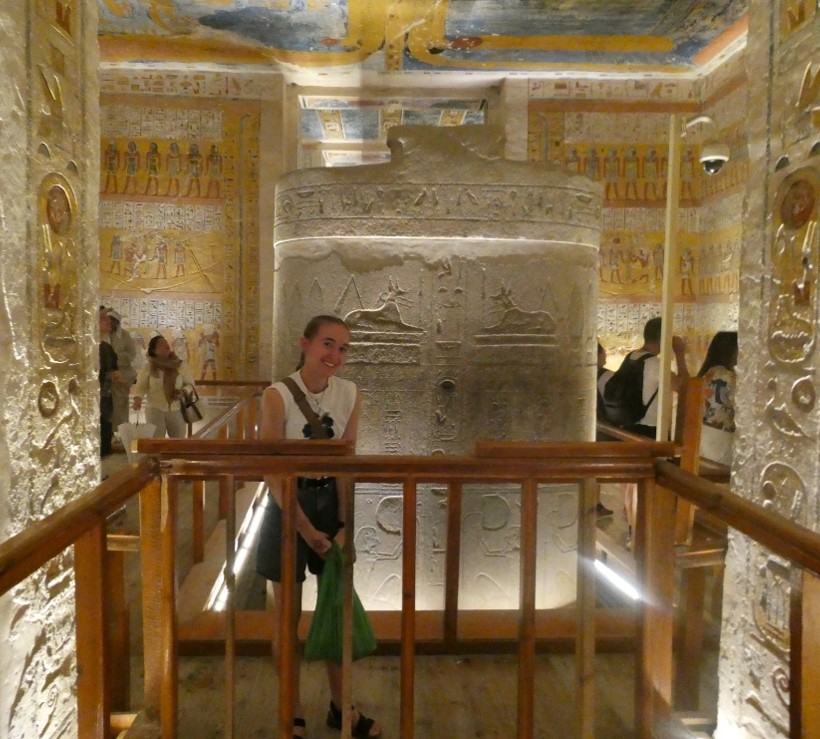
Rameses IV featured beautifully coloured hieroglyphics in remarkable condition and one of the largest sarcophagi in the valley, along with graffiti left by Romans and Ancient Greeks and an incredible burial chamber hastily converted from a pillared hall upon the pharaoh’s death.
Rameses III has a lengthy corridor leading to two pillared halls, with a detour where the builders nearly dug into a neighbouring tomb. The tomb ends in a grand pillared hall with wonderful paintings throughout.
Merenptah is enormous, with a long corridor leading to two chambers. The first features a sarcophagus lid with a carving of the goddess Nut. The burial chamber still holds the massive sarcophagus base and has a cathedral-like grandeur, though much of the artwork has deteriorated over time.
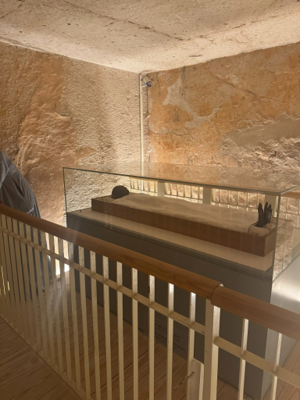
And then there was Tutankhamun. Surprisingly my favourite, despite being the smallest and most modest of the four. Having already seen all of his treasures at the GEM, it required far less imagination. Twelve baboons signifying the midnight hours on one wall, several depictions of the young pharaoh, and his mummified body still resting inside. Remarkable.
Egypt was simply beyond reality. No amount of research, documentaries or photographs can prepare you for the experience of standing in front of these ancient wonders in person. It is a destination that humbles you, educates you, and leaves you with more than just photos.
Yalla Habibi!