
Even today after many decades of exploration, Antarctica remains a world apart, a majestic last frontier surpassing even the most jaded of travellers’ expectations.
It is hard to put into words the sheer grandeur of an Antarctic landscape. This most southern of continents, this desert of ice, is so unique and uncommon to man’s experience, that even the most dramatic of photographs pale into insignificance when one is confronted by the sheer magnitude, beauty and wonder of an Antarctic landscape.
During this voyage which is timed for the Antarctic spring, there will be the possibility of sighting seven different species of penguin. The spring is mating season for penguins and other species, and you can witness their spectacular displays of courtship ritual, nest building and such antics as stone stealing. This is also the time the pack ice begins to melt resulting in dramatic icebergs and, when in the Falklands and South Georgia, the spring flowers will be in bloom.
We sail from Ushuaia in Argentina to the Falkland Islands, a truly enchanting place with a unique character and staggering wildlife. This is the last sanctuary of the elegant albatross which soars gracefully against the blue sky, with colonies of elephant seals basking at the foot of vertiginous cliffs. Our next stop is the remote island of South Georgia, a wildlife haven reputed to have more wildlife per square metre than any other place on the planet. Watching the huge elephant seals fight for their harems and being greeted by hundreds of thousands of breeding king penguins are truly unbelievable experiences. We then continue to the most remote and isolated continent, Antarctica, where we explore dramatic landscapes with gigantic icebergs, scenic channels and bustling penguin colonies.
In between our landings and while at sea, you can pass the time on deck looking for wildlife, attend the series of lectures by members of the expedition team.
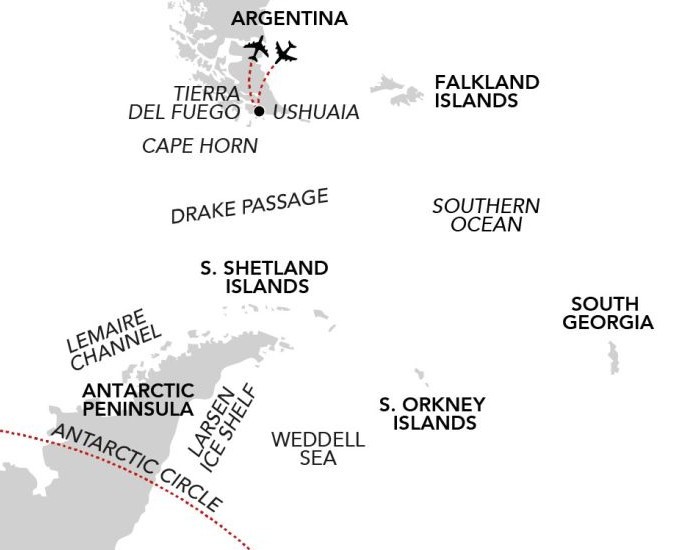
 Day 1 Ushuaia.
Day 2 Ushuaia & Embarkation.
Day 3 At Sea.
Day 4 West Falklands.
Day 5 Stanley, East Falklands.
Days 6-7 At Sea.
Days 8-11 South Georgia.
Days 12-14 At Sea.
Days 15-18 The South Shetland Islands & the Antarctic Peninsula.
Days 19-20 Drake Passage.
Day 21 Ushuaia
Please note:
Day 1 Ushuaia.
Day 2 Ushuaia & Embarkation.
Day 3 At Sea.
Day 4 West Falklands.
Day 5 Stanley, East Falklands.
Days 6-7 At Sea.
Days 8-11 South Georgia.
Days 12-14 At Sea.
Days 15-18 The South Shetland Islands & the Antarctic Peninsula.
Days 19-20 Drake Passage.
Day 21 Ushuaia
Please note:
Vessel Type: Expedition
Length: 73 metres
Passenger Capacity: 86
Built / Refurbished: 1992 / 2006
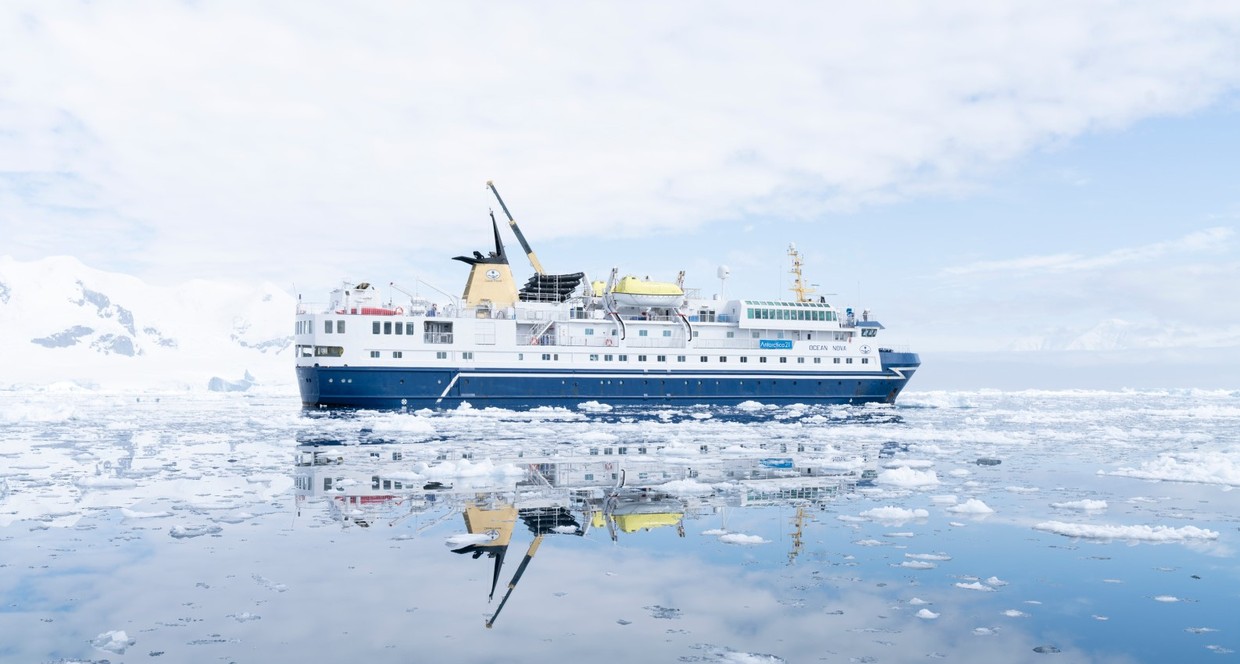
The Ocean Nova, built in Denmark in 1992 and fully refurbished in 2006, is a small yet comfortable expedition vessel accommodating up to 84 passengers. Cabins are spread across two decks and include single, double, and triple accommodations, all with sea views and private facilities. Designed with Scandinavian light woods, the cabins feature ample storage, desks, and flexible bedding arrangements, ensuring a practical and cosy retreat after a day of exploration. Passengers can relax in the Panorama Lounge, which offers panoramic views, daily briefings from the expedition team, and lectures on subjects ranging from ornithology to geology, while the library, small gym, and medical facilities enhance onboard comfort.
Dining aboard the Ocean Nova is informal yet enjoyable, with a single-sitting dining room offering a combination of table service and buffet, allowing all guests to dine together while taking in views through the portholes. Life on board is relaxed and immersive, often spent on deck watching for wildlife or simply admiring the surrounding landscapes. With one of the highest ice classes (1B) and a powerful 2000 hp diesel engine, the Ocean Nova is equipped to navigate icy waters or tranquil lochs with ease. A crew of 34, including North European officers, ensures both passenger safety and an enriching expedition experience, complemented by fully enclosed lifeboats and an onboard medical clinic.
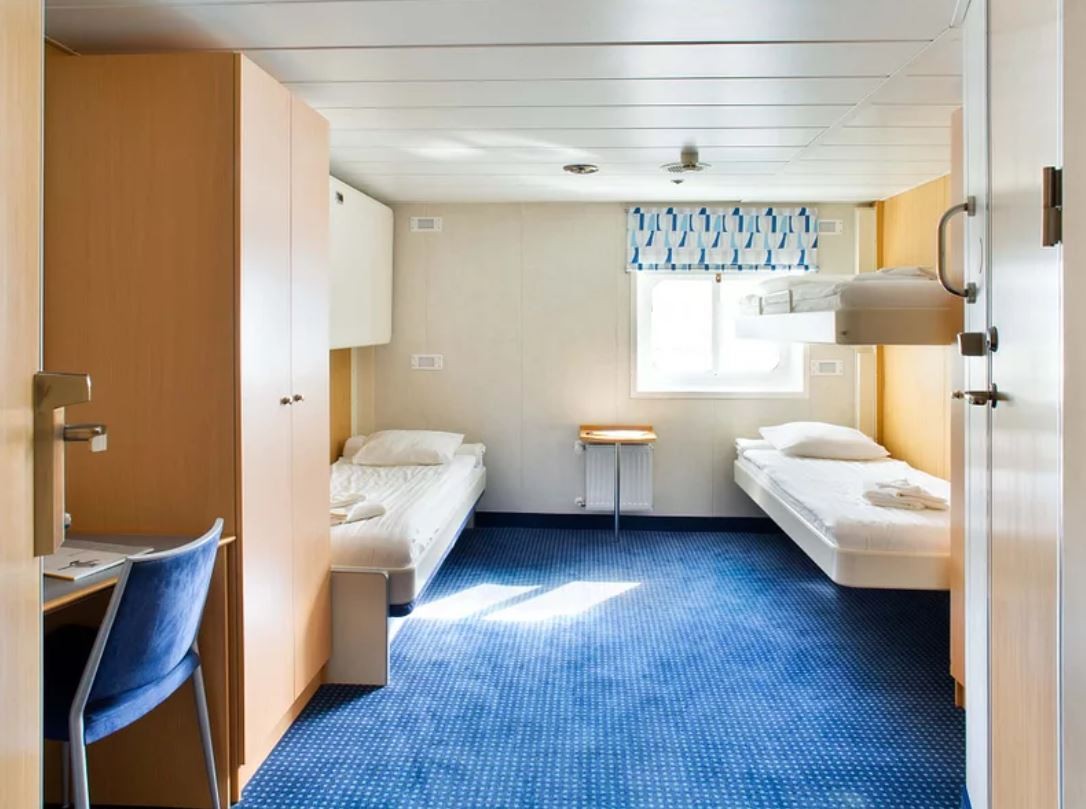
150 ft2 – 14 m2 - Bathroom, window, desk and chair, 2 lower twin beds and 1 upper bed.
Price: $14590 USD
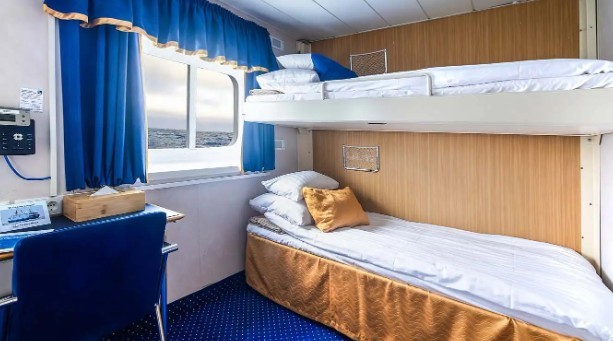
Each cabin includes a picture window, a desk with a chair, and practical storage space for clothes and equipment, as well as additional space under the bed for suitcases. The cabins are individually heat controlled to ensure a pleasant and comfortable stay throughout the voyage.
Price: $16990 USD
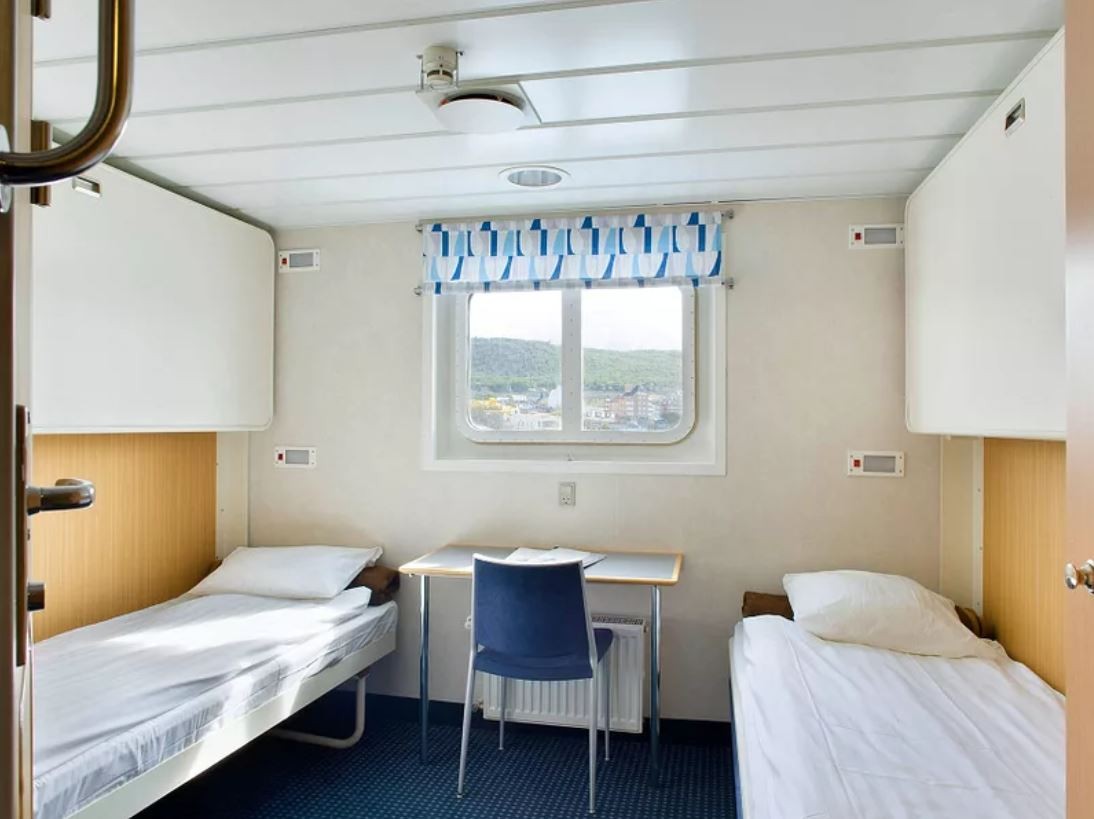
106 ft2 – 10 m2 - Bathroom, window, desk and chair, and 2 lower twin beds.
Price: $18290 USD
Each cabin includes a picture window, a desk with a chair, and practical storage space for clothes and equipment, as well as additional space under the bed for suitcases. The cabins are individually heat controlled to ensure a pleasant and comfortable stay throughout the voyage.
Price: $18290 USD
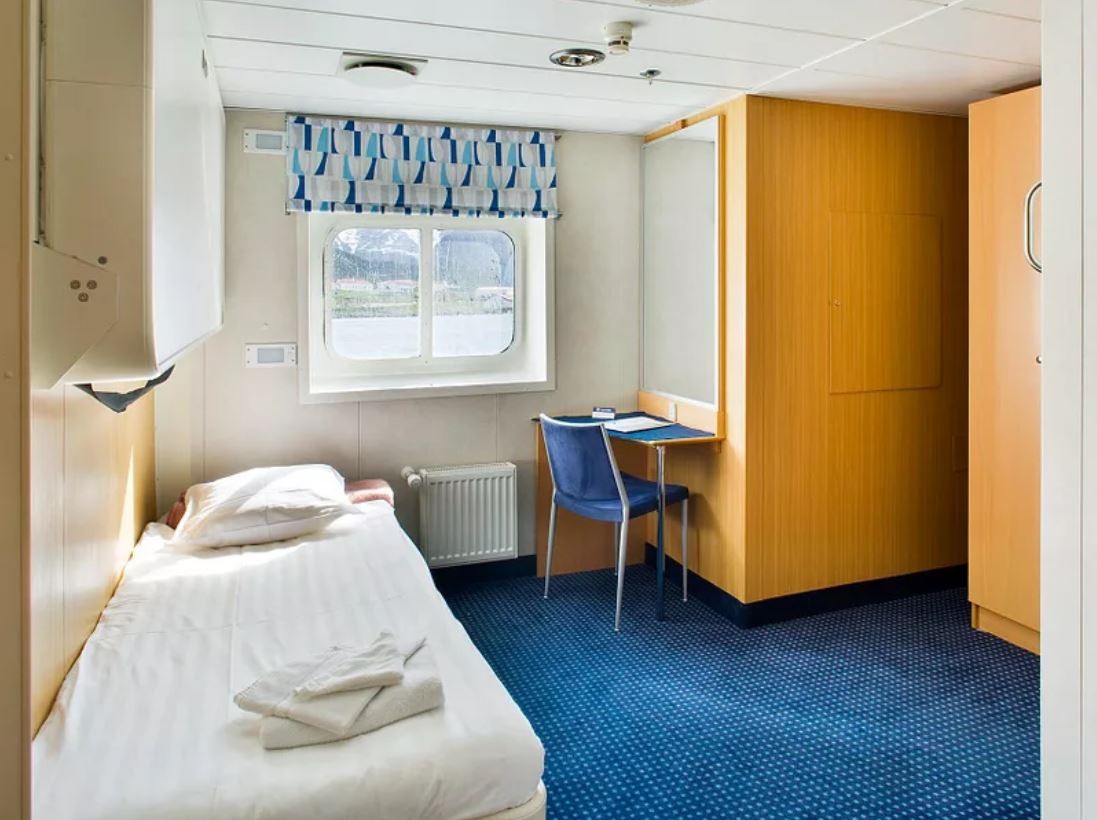
87 ft2 – 8 m2 - Bathroom, window, desk and chair, single lower bed.
Price: $31490 USD